
Explore
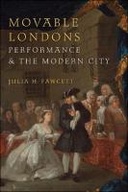


In September 1666, a fire sparked in a bakery on Pudding Lane grew until it had destroyed four-fifths of central London. The rebuilding efforts that followed not only launched the careers of some of London’s most famous architects, but also transformed Londoners’ relationship to their city by underscoring the ways that people could shape a city’s spaces—and the ways that a city’s spaces could shape its people. Movable Londons looks to the Restoration theater to understand how the dispossessed made London into a modern city after the Great Fire of 1666 and how the introduction of changeable scenery in theaters altered how Londoners conceptualized the city. Fawcett makes a claim for the centrality of unplanned spaces and the role of the Restoration theater in articulating those spaces as the modern city emerged and argues that movable scenery revolutionized London’s public theaters, inviting audiences to observe how the performers—many of them hailing from the same communities as their characters—navigated the stage.
This book is included in DOAB.
Why read this book? Have your say.
You must be logged in to comment.
Rights Information
Are you the author or publisher of this work? If so, you can claim it as yours by registering as an Unglue.it rights holder.Downloads
This work has been downloaded 17 times via unglue.it ebook links.
- 17 - pdf (CC BY-NC) at OAPEN Library.
Keywords
- thema EDItEUR::A The Arts::AM Architecture::AMX History of architecture
- thema EDItEUR::A The Arts::AT Performing arts
- thema EDItEUR::A The Arts::AT Performing arts::ATD Theatre studies::ATDH Theatre: technical and background skills
Links
DOI: 10.3998/mpub.14472416Editions