
Explore
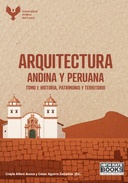
Arquitectura Andina y Peruana
Anthony Killke Sotomayor Belisario, Carmen Daniela Gonzales Martinez, Crayla Alfaro Aucca (editor), Dhevy Surya Tello Hermoza, Eska Elena Solano Meneses, Flor Maricel Medina Auccapure, Heidi Fernanda Ayte Baca, Jeanne Yadira Guerra Vera, Juan Carlos Astete Mendoza, Laura Milagros Tomayconza Calvo, Marco Antonio Luna Pichardo, Miguel Angel Yepez Peña, Noemi Mishelly Juárez Ballón, Olga Aylin Villena Ccasani, Paola Gabriela Torres Palomino, Paul Fernando Hilares Zevallos, Pilar Jazmín Huachaca Valdeiglesias, Osnaya Baltierra Santiago, Sheila Pamela Legoas Calcine, Medina Palacios Yendi, César Aguirre Zamalloa (editor), Universidad Andina del Cusco (editor)
2025
0 Ungluers have
Faved this Work


Login to Fave
The first volume of the collective book Andean and Peruvian Architecture, titled History, Heritage, and Territory in Andean and Peruvian Architecture, brings together research developed by professors and students of the Professional School of Architecture at the Andean University of Cusco.
This volume reflects the institution’s commitment to research-based education, addressing relevant issues of the regional and national context
from an academic, critical, and interdisciplinary perspective. The articles, peer-reviewed by external specialists, are organized around two priority
lines: History and Intervention in Built Heritage and Urbanism, Territory, and Landscape. Each contribution examines specific cases within the
Andean and Peruvian context through methodologies that integrate historical analysis, urban-territorial diagnosis, heritage conservation, and the
projection of sustainable habitats. Andean Molinology, by Juan Carlos Astete, explores the heritage and technical value of 19th-century hydraulic
mill architecture, highlighting its potential as a model of sustainability. Language of the Republic, by Pamela Legoas, Heidi Ayte, and Anthony
Sotomayor, analyzes Republican architecture as an expression of the State’s political-cultural discourse. In Revalorization of Cusco’s Industrial
Heritage, Noemi Juárez and her team study the Potrero Hacienda as industrial heritage, applying conservation and restoration criteria. Taray:
Between Memory and Matter, by Gonzales Martínez and collaborators, proposes a comprehensive revitalization of Taray’s historic center, linking
collective memory, local identity, and urban-architectural analysis. Relationship between Urban and Social Fabric and Human Needs, by Eska
Solano and coauthors, reflects on the connection between urban structure and social dynamics, adapting references from the European urban
agenda to the Latin American context. Finally, Living Component, by Paul Hilares and his team, proposes a multiscalar design for the Andean rural
habitat, integrating green networks, housing, and community facilities with a sustainable approach. This volume reflects the collective effort to
generate contextualized knowledge, strengthen research-based training, and contribute to territorial management and heritage preservation as
cornerstones of regional and national development.
This book is included in DOAB.
Rights Information
Are you the author or publisher of this work? If so, you can claim it as yours by registering as an Unglue.it rights holder.Downloads
This work has been downloaded 37 times via unglue.it ebook links.
- 37 - pdf (CC BY) at cdn.prod.website-files.com.
Keywords
- AM
- AMX
- Andean architecture
- heritage conservation
- LNY
- sustainable habitat
Links
DOI: 10.36881/ARQ2025IEditions