
Explore
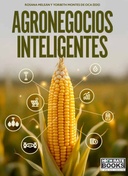
Agronegocios Inteligentes
FRANCISCO RAFAEL LEON CAVERO, Girard Vernaza Arroyo, Jessica Cohen, Jesus Daniel Rico Buitrago, Jonathan Alberto Campos Trigoso, Juan Alfredo Tuesta Panduro, Julio Cesar Yllatopa Canales, Elvis Alfonso Portillo Paez, Andreina Beatriz Portillo Lopez, Bessy Castillo Santa María, CARLOS ENRIQUE QUILCATE PAIRAZAMAN, Cesar Marcelo Cashpa, Diego Galviz, Fátima del Valle Urdaneta de Galué, Claudia Tello, Marcia Fabiola Jaramillo Paredes, MARGOT ISABEL LALANGUI BALCÁZAR, MARIA BEATRIZ PERALTA MOCHA, María Lucelly Urrego Marín, Mariana Del Rocío Verdezoto Reinoso, Marianela Cruel Preciado, Marilu Mestanza Mendoza, Medali Cueva Rodríguez, Meliza del Pilar, Nebenka Caro, OSCAR PORFIRIO CRUZ CRUZ, PABLO ALFREDO RITUAY TRUJILLO, Ronald Eugenio Ramón Guanuche, Rosana de Jesús Eras Agila, Sebastian Rafael Leon Leon, Sorely Amparo García Gutiérrez, WIGOBERTO ALVARADO CHUQUI, Rosana Alejandra Meleán Romero (editor), Yorberth Montes de Oca Rojas (editor)
2025
0 Ungluers have
Faved this Work


Login to Fave
Agricultural activities date back to production methods that for years have made it possible to provide food products to meet the basic needs of the population. Over time, these practices have evolved and improved in response to the growing demands of markets and society. Currently, agricultural activities are conceived from a business perspective that leads to agribusiness, now enhanced by intelligent technologies that enable greater precision in the field and are essential for achieving higher levels of efficiency and productivity. The purpose of this book, titled Smart Agribusiness, is to analyze, from both theoretical and practical perspectives, resilient, ethical, and competitive agribusiness models aligned with public policies, ecological justice, and global markets. It presents comparative analyses, case studies, and technological applications in various productive sectors across Latin American countries such as Peru, Ecuador, Mexico, Colombia, and Venezuela. The findings clarify and redefine the future of agricultural production through technological innovations that drive efficiency, transparency, and ecological justice in key sectors such as agro-export, agrotourism, traceability, and financial management—all from comprehensive perspectives on how artificial intelligence and sustainability are transforming agricultural systems worldwide. Smart agribusiness not only represents a trend but also an essential strategy to address the challenges of a strategic sector that must ensure food security and strengthen local economies while respecting transparent and inclusive agricultural chains oriented toward social and environmental well-being.
This book is included in DOAB.
Why read this book? Have your say.
You must be logged in to comment.