
Explore
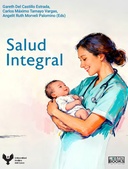
Salud integral
Aby Apodaca orozco, Aneth Vasquez, Benjamín Barón-Velandia, Carlos Alberto Severiche Sierra, Clarissa Guadalupe Armenta López, Dina Lizbeth Aparicio Jurado, Flor de maria franco Ataulluco, Gabriela Tinta Conto, Gareth Del Castillo Estrada, Ginne Ussi Guadalupe Apodaca Orozco, Guadalupe Adriana Miranda Cota, Ihosvany Basset Machado, JORGE LUIS GARCIA, Juan Manuel Sánchez Soto, Leidy Laura Castellón Simanca, Liliana Echavarria Ardizoni, Liliana Estefania Ramirez-Jaime, Lisandro José Alvarado-Peña, Lourdes Patricia Ortega Pipper, Luis Alfredo Vega, Magally Martinez Reyes, Loecelia Ruvalcaba, Marinés Giraldo, Mario Mitsuo Bueno Fernandez, Mirtha Camacho de Colque, Nidia Selene Castro Leyva, MARIA DEL PILAR NAVIA BUENO, Rafael Antonio Estévez Ramos, Rubén Carlos Alvarez Diez, Shiomara Orialit Espejo Lucana, VIOLETA VELIZ VACA, Wara Isabel Veliz Vaca, WENDY MARIA CARDENAS BARRERA, Ysabel Masías Ynocencio, Gareth Del Castillo Estrada (editor), Carlos Máximo Tamayo Vargas (editor), Angelit Ruth Morveli Palomino (editor)
2025
0 Ungluers have
Faved this Work


Login to Fave
The book Salud Integral brings together ten chapters addressing contemporary issues related to public health, mental health, social determinants, and biomedical advances across various Latin American contexts. Its objective is to present a broad and interdisciplinary view of health by integrating social, clinical, psychological, epidemiological, and public administration perspectives. The chapters examine topics such as health policy and innovation, vocational orientation and community participation, work-related stress among mobile workers, family functioning and ADHD, and molecular characterization of tuberculosis, among others. The book employs a diverse methodological approach, including qualitative documentary reviews, quantitative studies with statistical analyses, descriptive research on psychological well-being, and clinical analyses using laboratory techniques. This methodological variety enables the exploration of health from multiple levels: individual, family, community, and population. The overall conclusions emphasize that integral health requires intersectoral interventions, institutional strengthening, evidence-based policies, and continuous professional development. The findings also highlight the influence of family structures, community context, labor conditions, social
inequities, and technological gaps on well-being. The book reinforces the need to integrate scientific research—from social sciences to biomedical studies—to understand current health challenges and design sustainable solutions for the region.
This book is included in DOAB.
Why read this book? Have your say.
You must be logged in to comment.
Rights Information
Are you the author or publisher of this work? If so, you can claim it as yours by registering as an Unglue.it rights holder.Downloads
This work has been downloaded 4 times via unglue.it ebook links.
- 4 - pdf (CC BY-NC-ND) at cdn.prod.website-files.com.
Keywords
- integral health
- JBFN
Links
DOI: 10.36881/saludintEditions