
Explore
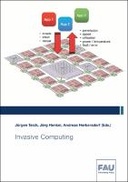
Invasive Computing
Nidhi Anantharajaiah, Tamim Asfour, Michael Bader, Lars Bauer, Jürgen Becker, Simon Bischof, Marcel Brand, Hans-Joachim Bungartz, Christian Eichler, Khalil Esper, Joachim Falk, Nael Fasfous, Felix Freiling, Andreas Fried, Michael Gerndt, Michael Glaß, Jeferson Gonzalez, Frank Hannig, Christian Heidorn, Jörg Henkel (editor), Andreas Herkersdorf (editor), Benedict Herzog, Jophin John, Timo Hönig, Felix Hundhausen, Heba Khdr, Tobias Langer, Oliver Lenke, Fabian Lesniak, Alexander Lindermayr, Alexandra Listl, Sebastian Maier, Nicole Megow, Marcel Mettler, Daniel Müller-Gritschneder, Hassan Nassar, Fabian Paus, Alexander Pöppl, Behnaz Pourmohseni, Jonas Rabenstein, Phillip Raffeck, Martin Rapp, Santiago Narváez Rivas, Mark Sagi, Franziska Schirrmacher, Ulf Schlichtmann, Florian Schmaus, Wolfgang Schröder-Preikschat, Tobias Schwarzer, Mohammed Bakr Sikal, Bertrand Simon, Gregor Snelting, Jan Spieck, Akshay Srivatsa, Walter Stechele, Jürgen Teich (editor), Furkan Turan, Isaías A. Comprés Ureña, Ingrid Verbauwhede, Dominik Walter, Thomas Wild, Stefan Wildermann, Mario Wille, Michael Witterauf, Li Zhang
2022
0 Ungluers have
Faved this Work


Login to Fave
Invasive computing is a paradigm for designing and programming future parallel computing systems. For systems with 1,000 or more cores on a chip, resource-aware programming is of utmost importance to obtain high utilisation as well as computational, energy and power efficiency. Invasive computing provides a programmer explicit handles to specify and argue about resource requirements desired or required in different phases of execution: In an invade phase, an application asks the operating system to allocate a set of processor, memory and communication resources to be claimed. In a subsequent infect phase, the parallel workload is spread and executed on the obtained claim of resources. Finally, if the degree of parallelism should be lower again, a retreat operation frees the claim again, and the application resumes a sequential execution. To support this idea of self-adaptive and resource-aware programming, not only new programming concepts, languages, compilers, and operating systems were needed to be developed, but also revolutionary architectural changes in the design of MPSoCs (multiprocessor systems-on-a-chip) to efficiently support invasion, infection, and retreat operations. This book gives a comprehensive overview of all aspects of invasive computing.
This book is included in DOAB.
Why read this book? Have your say.
You must be logged in to comment.
Rights Information
Are you the author or publisher of this work? If so, you can claim it as yours by registering as an Unglue.it rights holder.Downloads
This work has been downloaded 1 times via unglue.it ebook links.
- 1 - pdf (CC BY) at OAPEN Library.
Keywords
- Ablaufplanung
- Chip-Multiprozessor
- Dienstgüte
- Hardwarebeschleunigung
- Network-on-Chip
- Parallelprogrammierung
- Parallelverarbeitung
- Ressourcenverwaltung
- System-on-Chip
- thema EDItEUR::U Computing and Information Technology::UK Computer hardware::UKM Embedded systems
- thema EDItEUR::U Computing and Information Technology::UM Computer programming / software engineering::UMA Programming techniques
- thema EDItEUR::U Computing and Information Technology::UT Computer networking and communications::UTR Distributed systems
- thema EDItEUR::U Computing and Information Technology::UY Computer science::UYD Systems analysis and design
- thema EDItEUR::U Computing and Information Technology::UY Computer science::UYF Computer architecture and logic design
Links
DOI: 10.25593/978-3-96147-571-1Editions