
Explore
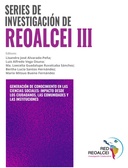
Series de Investigación REOALCEI III. Generación de conocimiento en las ciencias sociales: impacto desde los ciudadanos, las comunidades y las instituciones
Lisandro José Alvarado-Peña (editor), Alina del Pilar Antón Chávez, Mario Mitsuo Bueno Fernandez (editor), Rafael Fonseca de Castro, Elvia Alejandra Chu González, León Dozal, Rodrigo Fidel Gaxiola Sosa, Noemi González Rios, José Fernando Hernandez Silva, David Jasso Velazquez, José María León Villalobos, Carmen Guadalupe López Varela, RODOLFO VALENTIN MUÑOZ CASTORENA, Carolina Quiñónez Zúñiga, Wilfred-Fabián Rivera-Martínez, Mónica Rodríguez Ortiz, Loecelia Ruvalcaba (editor), Flor Salaiza-Lizárraga, Hugo Alexander Semanate Quiñonez, Luis Alfredo Vega (editor), Sonia Villagrán Rueda, Bertha Lucía Santos-Hernández (editor)
2025
0 Ungluers have
Faved this Work


Login to Fave
The book “Generation of Knowledge in Social Sciences: Impact from Citizens, Communities, and Institutions” addresses the complex and multifaceted production of knowledge in contemporary social spheres, examining how different actors influence and are influenced by this process. The text explores the citizen dimension through active citizenship and urban monitoring of green spaces, suggesting proactive community roles in environmental management. Simultaneously, it analyzes the impact of technology, dedicating space to Information and Communication Technologies (ICT) as a driver of competitiveness in Colombia, while examining the double-edged nature of digital connection with issues such as mobile addiction and social isolation in the university setting. Furthermore, the work delves into the impact of these changes in professional and educational environments. It discusses the protection of honor in Peruvian journalism as a legal aspect of information generation and explores Hybrid Education, assessing its psychosocial effects on mental health and the reconfiguration of teaching work. Finally, the book includes a literature review on Artificial Intelligence in Higher Education, closing the thematic circle on how technology and institutions are redefining social knowledge. Together, the book provides a comprehensive view of the social, technological, and legal forces that shape current social science.
This book is included in DOAB.
Why read this book? Have your say.
You must be logged in to comment.
Rights Information
Are you the author or publisher of this work? If so, you can claim it as yours by registering as an Unglue.it rights holder.Downloads
This work has been downloaded 19 times via unglue.it ebook links.
- 19 - pdf (CC BY-NC-ND) at cdn.prod.website-files.com.
Keywords
- JN
- JPVH
- pdr
- social knowledge
Links
DOI: 10.38202/seriesinvreoalcei3Editions