
Explore
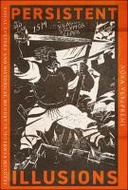


Persistent Illusions examines the visual representation of history in interwar Hungary, where interpretations of the past were suffused with references to the country's recent territorial loss. In these images of history, nineteenth-century themes and motifs took on new forms to promote twentieth-century political ideas through the new media of modernity. Nóra Veszprémi illustrates how modernization created resilient imagery that persists in cultural memory through a wide range of paintings, prints, stamps, public spectacles, and monuments. In doing so, she challenges the assumption that the official culture of the right-wing, authoritarian regime of Admiral Miklós Horthy was characterized by a superficial revival of historical styles. Instead, she argues that the regime drew on history in complex, modern ways that disseminated motifs and ideological frameworks across political divides. By analyzing how ideology shapes enduring concepts of the past through the evocative power of images, Persistent Illusions encourages the reader to critically examine the legacies of interwar ideas and imagery in the present day.
This book is included in DOAB.
Why read this book? Have your say.
You must be logged in to comment.
Rights Information
Are you the author or publisher of this work? If so, you can claim it as yours by registering as an Unglue.it rights holder.Downloads
This work has been downloaded 10 times via unglue.it ebook links.
- 10 - pdf (CC BY-NC-ND) at OAPEN Library.
Keywords
- History narratives
- Horthy regime
- Hungarian artwork
- National territory
- nationhood
- political extremism
- thema EDItEUR::A The Arts::AG The Arts: treatments and subjects::AGA History of art
- thema EDItEUR::N History and Archaeology::NH History::NHD European history
- Twentieth-century art
- Ukraine invasion
Links
DOI: 10.7298/5ytv-ge84Editions