
Explore
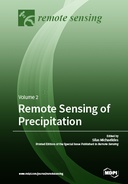
Remote Sensing of Precipitation: Volume 2
Silas Michaelides
2019
0 Ungluers have
Faved this Work


Login to Fave
Precipitation is a well-recognized pillar in global water and energy balances. An accurate and timely understanding of its characteristics at the global, regional, and local scales is indispensable for a clearer understanding of the mechanisms underlying the Earth’s atmosphere–ocean complex system. Precipitation is one of the elements that is documented to be greatly affected by climate change. In its various forms, precipitation comprises a primary source of freshwater, which is vital for the sustainability of almost all human activities. Its socio-economic significance is fundamental in managing this natural resource effectively, in applications ranging from irrigation to industrial and household usage. Remote sensing of precipitation is pursued through a broad spectrum of continuously enriched and upgraded instrumentation, embracing sensors which can be ground-based (e.g., weather radars), satellite-borne (e.g., passive or active space-borne sensors), underwater (e.g., hydrophones), aerial, or ship-borne.
This book is included in DOAB.
Rights Information
Are you the author or publisher of this work? If so, you can claim it as yours by registering as an Unglue.it rights holder.Downloads
This work has been downloaded 529 times via unglue.it ebook links.
- 142 - pdf (CC BY-NC-ND) at Unglue.it.
Links
DOI: 10.3390/books978-3-03921-288-0Editions