
Explore
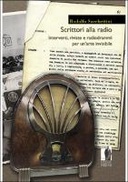


This book describes the complex relationship between writers and the radio, offering itself as an unpublished and original tool for measuring the cultural and political objectives of the public radio service between the 1930s and 1960s. From initial suspicions to pioneering attempts and productive consolidation, this new and invisible art form significantly reflected the resistances, experiments and impulses of the Italian literary society. With great competence, Rodolfo Sacchettini (one of the leading specialists on the subject) focuses on works which were specifically written for the radio: radio plays, conferences, cultural broadcasts, etc. The 1930s are described as a whirlwind of fear and hypnosis, adventures and modernity: from Benjamin's Germany and Korczak's Poland, with the invention of programs for children and adolescents, to fascist Italy, with audience records for the magazine I 4 moschettieri di Nizza and Morbelli. In the background, the United States with Wells and MacLeish who, by playing on the edge of credibility, announced the landing of Martians and mysterious foreign conquerors on the microphone. The second part of the volume is dedicated to the Italian post-war period, when writers systematically collaborated with radio stations, creating important works whose merit is also to focus and enhance the potential of an artistic genre which was still being defined and developed. Sacchettini, through the additional use of unpublished scripts, analyses radio plays by Savinio, Gadda, Pratolini and Dessí: auteur texts for a medium which would belong to writers for a very long time.
This book is included in DOAB.
Why read this book? Have your say.
You must be logged in to comment.
Rights Information
Are you the author or publisher of this work? If so, you can claim it as yours by registering as an Unglue.it rights holder.Downloads
This work has been downloaded 20 times via unglue.it ebook links.
- 20 - pdf (CC BY) at OAPEN Library.
Keywords
- Literature & literary studies
- Literature: history & criticism
Links
DOI: 10.36253/978-88-6453-838-9Editions