
Explore
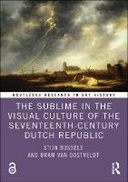
The Sublime in the Visual Culture of the Seventeenth-Century Dutch Republic
Stijn Bussels and Bram Van Oostveldt
2024
0 Ungluers have
Faved this Work


Login to Fave
Contrary to what Kant believed about the Dutch (and their visual culture) as “being of an orderly and diligent position” and thus having no feeling for the sublime, this book argues that the sublime played an important role in seventeenth-century Dutch visual culture.
By looking at different visualizations of exceptional heights, divine presence, political grandeur, extreme violence, and extraordinary artifacts, the authors demonstrate how viewers were confronted with the sublime, which evoked in them a combination of contrasting feelings of awe and fear, attraction and repulsion. In studying seventeenth-century Dutch visual culture through the lens of notions of the sublime, we can move beyond the traditional and still widespread views on Dutch art as the ultimate representation of everyday life and the expression of a prosperous society in terms of calmness, neatness, and order.
The book will be of interest to scholars working in art history, visual culture, architectural history, and cultural history.
This book is included in DOAB.
Rights Information
Are you the author or publisher of this work? If so, you can claim it as yours by registering as an Unglue.it rights holder.Downloads
This work has been downloaded 11 times via unglue.it ebook links.
- 11 - pdf (CC BY-NC-ND) at Unglue.it.
Keywords
- History Of Art / Art & Design Styles
- The arts
- thema EDItEUR::A The Arts::AG The Arts: treatments and subjects::AGA History of art
Links
DOI: 10.4324/9781003340942Editions