
Explore
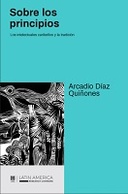


From the war of 1898 to the Cold War, this book on the Hispanic Caribbean is a journey through cities and ideas, through intellectuals and debates, in an analytical arc that typifies the central concerns of the new intellectual history in Latin America. Regarding New York, Martí and Henríquez Ureña, Díaz Quiñones notes that “the memory of the city works through its omissions as much as through its affirmations.” It should then be added that this is also a book about memory, the memory practiced by those scholars and the memory invoked by Díaz Quiñones himself in his profiles and readings. It could not be otherwise, considering that this is the author of Cintio Vitier: la memoria integrara (1987) and La memoria rota (1993).
The reader leaves Sobre los Principios with an image of the Hispanic Caribbean that is very far removed from traditional identification postulates. It is not religion, language or race that unifies the community. Nor is it the soul, the spirit or the ideology of any of the nationalisms of the last two centuries. It is, in any case, the war and the memory of diverse historical subjects, in their endless struggle for representation, which provide the region with a sense of community.
This book is included in DOAB.
Why read this book? Have your say.
You must be logged in to comment.