
Explore
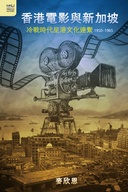


In the 1950s, the Cold War led China to close its doors to the outside world, and Hong Kong replaced Shanghai as the most important center for Chinese-language film production. Both Singapore and Hong Kong were located outside of Cold War-era China’s “Bamboo Curtain,” forming a shared identity as “overseas Chinese.” At the time, Hong Kong and Singapore/Malaysia were British colonies, creating political and military ties between the two regions. Culturally, the Singapore-Malaysia region was the largest market for Hong Kong films and literary works during that era. Hong Kong films of the Cold War period often portrayed Singapore and Malaysia with a familial closeness, forming a kind of “cultural imagination.” This gave rise to a “film culture ring” that connected Hong Kong and Singapore.
This book adopts a cultural-historical analytical approach, combined with close readings of film texts, to examine six films produced by the studios MP & GI (Cathay) and Kong Ngee Co., all of which feature Singapore-Malaysia themes. It reconsiders the formation and early signs of rupture in the Hong Kong–Singapore film culture ring, and explores how the subjectivity of Hong Kong cinema was shaped through the gaze of the Other.
This book is included in DOAB.
Why read this book? Have your say.
You must be logged in to comment.
Rights Information
Are you the author or publisher of this work? If so, you can claim it as yours by registering as an Unglue.it rights holder.Downloads
This work has been downloaded 47 times via unglue.it ebook links.
- 47 - pdf (CC BY-NC-ND) at openbookshongkong.com.
Keywords
- ATF
- Cold War
- Cultural Studies
- Film
- film production
- film studies
- History
- hong kong
- Malaysia
- Media Studies
- NH
- Singapore
Editions